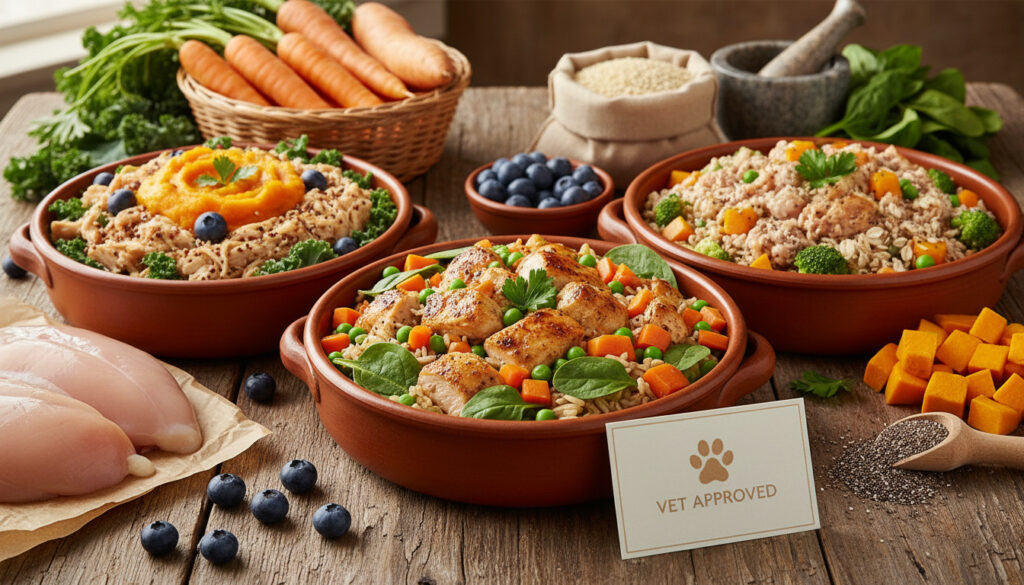
Homemade Dog Food Recipes – Vet-Approved Balanced Meals
Homemade dog food recipes have gained significant traction among pet owners seeking greater control over their dogs’ nutrition. These DIY formulations promise fresh, natural ingredients without the preservatives found in commercial kibble, yet they demand precise nutritional balancing to meet Association of American Feed Control Officials (AAFCO) standards.
While the appeal of cooking for your canine companion is understandable, veterinary experts emphasize that safety hinges on proper formulation. Without careful attention to macronutrient ratios and essential supplements, well-intentioned home cooking can lead to dangerous deficiencies in calcium, taurine, or vitamins.
What Are the Best Homemade Dog Food Recipes?
The most reliable homemade dog food recipes share one critical characteristic: they are formulated by veterinary nutritionists to meet AAFCO guidelines for complete and balanced nutrition. These formulations typically combine lean proteins, complex carbohydrates, and vegetables with precise micronutrient supplements.
Vet-approved options range from simple two-ingredient chicken-based meals to complex whole-food blends utilizing multiple protein sources. Yumwoof’s veterinary formulations include budget-friendly pork preparations and low-fat chicken recipes adaptable for small breeds like Miniature Schnauzers. For dogs with poultry sensitivities, turkey, rabbit, beef, and fish-based alternatives provide complete amino acid profiles.
- Vet-approved recipes provide AAFCO-balanced nutrition when prepared correctly
- Most effective formulations use 2-5 whole ingredients plus specialized supplements
- Chicken-free alternatives using pork, turkey, or rabbit accommodate common protein allergies
- Budget-friendly options utilizing ground pork or chicken thighs cost $8-15 weekly for a 30-pound dog
- Weight-specific recipes accommodate dogs ranging from 15 to 60 pounds
- Both gently cooked and raw preparations are available, though raw requires strict hygiene protocols
- All recipes require thorough cooking of proteins and vegetables followed by complete cooling before serving
| Nutrient | Percentage of Diet | Primary Sources |
|---|---|---|
| Protein | 40-50% | Pork, turkey, chicken, beef, fish |
| Fats | 10-20% | Fish oil, flax oil, olive oil |
| Carbohydrates/Vegetables | 20-30% | Rice, quinoa, pumpkin, carrots, broccoli |
| Calcium | Variable | Eggshells, bone meal, supplements |
| Fiber | Variable | Chia seeds, psyllium, leafy greens |
| Omega-3 fatty acids | Variable | Mackerel, sardines, flaxseed |
Is Homemade Dog Food Safe for Dogs?
Safety depends entirely on nutritional completeness. Veterinary guidelines indicate that homemade food is safe only when AAFCO-balanced and monitored through biannual bloodwork. The primary risks emerge when owners omit necessary supplements, leading to calcium deficiencies or taurine-related heart issues. Raw meat preparations carry additional bacterial contamination risks requiring stringent kitchen hygiene.
Improper recipes risk deficiencies in essential micronutrients that manifest gradually over months. Dogs may appear healthy while developing skeletal problems from calcium-phosphorus imbalances or cardiac issues from taurine shortages. These conditions become apparent only through veterinary blood panels or advanced symptoms.
Can I Feed My Puppy Homemade Dog Food?
Puppies require distinct nutritional profiles compared to adult dogs. Growing dogs need higher protein and calcium levels specifically calibrated for development rather than maintenance. Owners must select recipes formulated for the AAFCO growth profile rather than adult maintenance, typically using tools like Balance IT to ensure appropriate mineral ratios. Adult recipes lack the caloric density and nutrient concentration necessary for proper skeletal development.
How Do I Make Balanced Homemade Dog Food?
Balancing homemade dog food requires precise macronutrient distribution and micronutrient supplementation. The general framework follows a 40-50% protein, 10-20% fat, and 20-30% carbohydrate structure, adjusted for individual energy requirements. Veterinary nutritionists recommend using formulation tools or consulting board-certified specialists to verify completeness.
What Ingredients Are Safe for Homemade Dog Food?
Acceptable ingredients include lean meats such as pork, turkey, beef, and fish; cooked grains including rice and quinoa; and vegetables like pumpkin, carrots, broccoli, and leafy greens. A Pup Above recommends incorporating healthy fats from olive oil, flax oil, and fish oil. Calcium sources include ground eggshells, while chia seeds and psyllium provide necessary fiber. Organ meats such as liver provide essential vitamins but should comprise no more than 10% of the total diet to prevent vitamin A toxicity.
What Foods Should I Avoid in Homemade Dog Food?
Certain human foods prove toxic to dogs and must never appear in homemade recipes. The American Kennel Club warns against onions, garlic, grapes, raisins, chocolate, and xylitol-containing products. Raw meats present bacterial hazards including Salmonella and E. coli. High-fat ingredients pose particular risks for pancreatitis-prone breeds such as Miniature Schnauzers.
How Much Homemade Dog Food Should I Feed My Dog?
Portion calculations depend on the dog’s weight and activity level. Adult dogs generally require 20-30 kilocalories per pound of body weight daily, though individual metabolism varies significantly. A 30-pound dog typically consumes approximately 4.5 ounces of cooked dark chicken meat, two cups of white rice, 1.5 tablespoons of mixed vegetables, and 2-3 teaspoons of vegetable oil daily, supplemented with 2.5 scoops of Balance IT supplement.
How to Store Homemade Dog Food?
Proper storage maintains nutritional integrity and prevents spoilage. Refrigerated homemade food remains safe for three to five days in airtight containers. For longer preservation, freeze portions for up to three months. Goodness Gracious Treats notes that thawing frozen meals overnight in the refrigerator rather than at room temperature inhibits bacterial growth. Warm refrigerated or thawed food gently before serving, avoiding microwave use which creates uneven heating.
Calculate your dog’s daily caloric needs using the 20-30 kcal per pound guideline, then divide the total batch into individual meal portions before freezing. This approach ensures consistent calorie delivery and simplifies daily feeding routines.
Always thaw frozen homemade food in the refrigerator overnight. Room temperature thawing creates optimal conditions for bacterial proliferation. Warm meals gently using warm water baths rather than microwaves to prevent dangerous hot spots that could burn your dog’s mouth.
Integrate micronutrient supplements such as Balance IT only after cooking and cooling the base ingredients. Mix thoroughly to ensure even distribution throughout the batch, preventing nutrient concentration in individual portions.
Is Homemade Dog Food Cheaper Than Commercial?
Cost analysis reveals that homemade food often undercuts premium commercial kibble for owners willing to purchase ingredients in bulk. Weekly expenses vary by protein source and recipe complexity, with strategic shopping reducing costs further.
| Recipe Type | Weekly Cost (30 lb Dog) | Cost Factors |
|---|---|---|
| Chicken Base | $8-12 | Lowest cost; utilize sales on chicken thighs |
| Pork/Turkey | $10-15 | Bulk purchases reduce per-meal cost |
| Supplemented Mash | $12-18 | Vegetables inexpensive; premix adds ~$1 daily |
| Whole-Food Blend | $15-20 | Nuts and seeds increase cost but boost nutrient density |
Video tutorials from Master Bowie’s Kitchen demonstrate preparation techniques for cost-effective raw and gently cooked options. Shopping at farmers markets or buying discounted bulk meat reduces expenses further. Digital formulation tools help prevent costly nutritional errors that could result in veterinary bills for deficiency-related illnesses.
How to Transition Your Dog to a Homemade Diet
Transitioning to homemade food requires systematic implementation over 7-10 days to prevent gastrointestinal upset. Abrupt dietary changes frequently cause vomiting or diarrhea regardless of the new food’s quality.
- Veterinary Consultation: Obtain baseline bloodwork and approval from your veterinarian before changing diets.
- Recipe Selection: Choose an AAFCO-compliant formula appropriate for your dog’s life stage and weight.
- Initial Preparation: Cook a small test batch to assess palatability and digestive tolerance.
- Gradual Introduction: Mix 25% homemade food with 75% current food for three days, then shift to 50/50 for three days, followed by 75/25 for three days.
- Full Transition: Complete the switch to 100% homemade after day seven or ten, monitoring stool quality and energy levels throughout.
- Monitoring: Schedule follow-up bloodwork six months after full transition to verify nutritional adequacy.
What Is Established vs. Uncertain About Homemade Dog Food?
The scientific community has verified specific nutritional requirements while other aspects remain under investigation. Understanding this distinction helps owners make informed decisions about their pets’ diets.
Established Facts
- AAFCO publishes specific nutrient profiles for canine growth and maintenance
- Calcium and taurine deficiencies present documented health risks in unbalanced diets
- Onions, garlic, grapes, and chocolate cause toxicity in dogs
- Supplements like Balance IT provide necessary micronutrients missing from whole foods alone
Remaining Uncertainties
- Individual metabolic variations affect precise caloric needs between dogs of identical weights
- Long-term effects of specific ingredient combinations require further longitudinal study
- Optimal fiber ratios for specific breed digestive systems remain under investigation
Why Do Pet Owners Choose Homemade Over Commercial Food?
Pet owners increasingly turn to homemade diets driven by concerns over commercial food recalls and ingredient transparency. This shift reflects broader consumer desires for whole-food nutrition and away from processed ingredients. For dogs with specific protein allergies or sensitivities, homemade meals eliminate the risk of undisclosed additives or cross-contamination found in manufacturing facilities.
The practice also allows owners to accommodate ethical preferences, such as selecting humanely raised proteins or organic produce, though these choices impact the overall cost structure. While unrelated to canine nutrition, owners managing their own health conditions may find parallels in dietary management, such as understanding What Is Spinal Stenosis – Symptoms, Causes and Treatments when considering mobility limitations that affect both human and pet exercise routines.
What Do Veterinary Experts Say About Homemade Diets?
Veterinary nutritionists emphasize that homemade diets demand the same rigor as pharmaceutical formulations. Without professional oversight, owners risk creating meals that are simultaneously calorie-rich and nutrient-poor.
“Safe homemade dog food requires AAFCO balancing and regular veterinary monitoring through bloodwork every six months. The absence of supplements virtually guarantees micronutrient deficiencies over time.”
— Veterinary Nutrition Guidelines, Healthy Paws Pet Insurance
“Improper recipes risk deficiencies in calcium, taurine, or vitamins. Tools like Balance IT or consultation with board-certified veterinary nutritionists are essential for long-term health.”
— Ask a Vet Nutrition Blog
Final Considerations for Homemade Dog Food
Homemade dog food offers valid nutritional benefits when owners commit to AAFCO-compliant recipes and veterinary oversight. Success requires precise macronutrient balancing, essential supplements, proper storage protocols, and regular health monitoring. While cost-effective compared to premium commercial alternatives, the approach demands significant time investment and culinary precision. Owners must weigh the benefits of ingredient control against the risks of nutritional deficiency inherent in unformulated diets. Those researching comprehensive health management might also review What Is Spinal Stenosis – Symptoms, Causes, Treatment Guide to understand how chronic conditions affect overall wellness planning.
Frequently Asked Questions
What are the most common mistakes when making homemade dog food?
The most frequent errors include omitting essential supplements like calcium or multivitamins, using toxic ingredients such as onions or garlic, and failing to cook proteins thoroughly. Owners often miscalculate portion sizes, leading to obesity or malnutrition.
Can I use raw meat in homemade dog food recipes?
Raw meat presents significant bacterial contamination risks including Salmonella and E. coli. While some recipes use gently cooked or raw preparations, veterinary guidelines emphasize that cooking proteins eliminates pathogens and improves digestibility for most dogs.
How do I know if my homemade recipe is nutritionally complete?
Verify completeness using formulation software like Balance IT or consult a board-certified veterinary nutritionist. The recipe should specify exact quantities of meats, carbohydrates, vegetables, and supplements meeting AAFCO standards for your dog’s life stage.
Is grain-free homemade food better for dogs?
Grain-free formulations provide no proven health benefits for dogs without specific grain allergies. Whole grains like rice and quinoa offer valuable carbohydrates and fiber. Avoid grain-free diets unless your veterinarian diagnoses a specific sensitivity.
How often should I change homemade recipes?
Maintain consistency once you identify a well-tolerated, balanced recipe. Frequent ingredient changes increase the risk of digestive upset and nutritional imbalance. If rotating proteins, ensure each recipe maintains identical macronutrient ratios and supplement levels.
More related posts
 Party in the USA: Age, Why Miley Stopped Singing, Vocal Diagnosis
 Natalia Dyer Movies and TV Shows: Complete Filmography
 Lakers vs Bucks Player Stats: Latest Game Breakdown
 Catherine O’Hara Cause of Death: How Did She Die
 Best Travel Credit Cards 2025 – Compare Top Rewards and Benefits
 The Fragrant Flower Blooms with Dignity: Episodes Guide
 2025 Lexus GX 550: Price, Specs & Key Comparisons
 when did fortnite come out
