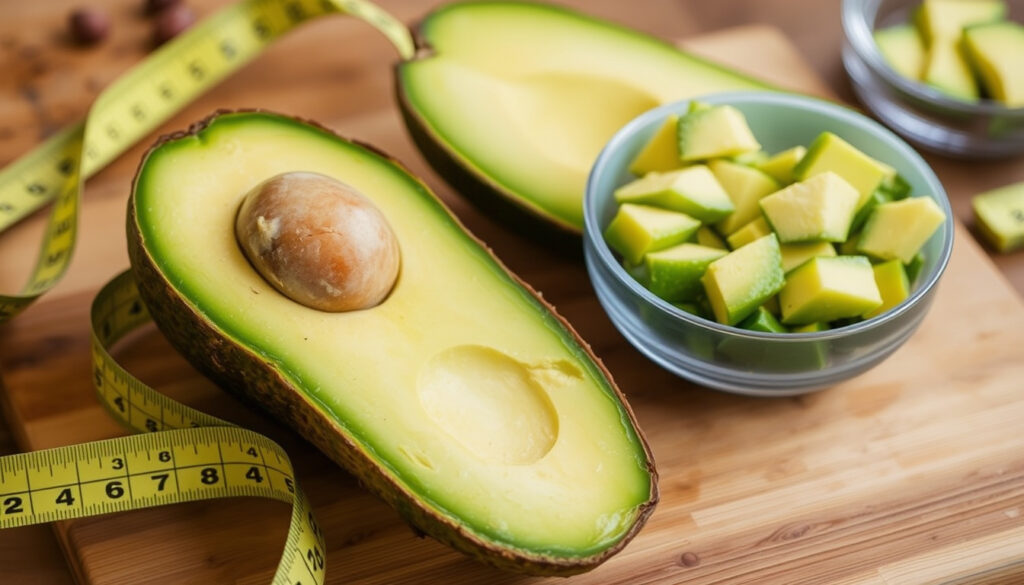
How Many Calories in an Avocado? Nutrition Facts & Benefits
Few foods spark as much confusion as the avocado. It’s creamy, satisfying, and packed with nutrients—yet at 240 calories per medium fruit, some wonder if it’s too calorie-dense for a healthy diet. We break down the numbers, the science, and the practical storage tips so you can decide for yourself.
Calories per medium avocado: 240 ·
Total fat: 22 g ·
Monounsaturated fat: 15 g ·
Carbohydrates: 13 g ·
Protein: 3 g
Quick snapshot
- A medium avocado contains 240 calories Harvard T.H. Chan School of Public Health
- One-third of a medium avocado (50g) has 80 calories Love One Today
- Avocados have more potassium per gram than bananas California Avocados
- Whether daily avocado consumption leads to weight gain depends on total calorie intake GoodRx
- The direct effect of avocado on belly fat reduction is not conclusively proven PubMed Central / Nutrients
- Calorie density signal: 240 calories per medium avocado – roughly 12% of a 2,000-calorie daily diet Harvard Nutrition Source
- Look for clearer data on avocado’s role in visceral fat reduction as new clinical trials emerge PubMed Central / Nutrients
How many calories are in an avocado?
Calories by serving size
Avocados come in different sizes, and the calorie count changes accordingly. A medium avocado (about 145g) contains 240 calories, according to Harvard T.H. Chan School of Public Health (The Nutrition Source). But most people don’t eat a whole avocado in one sitting. The standard serving size defined by Love One Today (nutrition education program) is one-third of a medium avocado, or 50g, which provides 80 calories.
Here’s how the numbers stack up by fruit size:
- Mini avocado (70g): about 120 calories
- Small avocado (100g): about 160 calories
- Medium avocado (145g): 240 calories
- Large avocado (195g): about 320 calories
Per 100 grams, an avocado delivers roughly 160 calories Healthline (trusted health publisher).
For someone watching their calorie intake, the serving size is everything. One-third of an avocado is a reasonable addition; a whole large avocado can push a meal past 500 calories.
Nutritional breakdown of an avocado
Beyond calories, avocados offer a dense nutrient profile. A medium fruit contains 22g total fat (15g monounsaturated, 4g polyunsaturated, 3g saturated), 13g carbohydrates, 9g fiber, and 3g protein Harvard Nutrition Source. California Avocados (industry authority) adds that avocados are naturally free of sodium, sugar, and cholesterol, and they help your body absorb fat-soluble vitamins A, D, K, and E. One number stands out: 485mg of potassium per 100g — more than a banana’s 358mg Healthline.
The trade-off: Avocados are calorie-dense. University of Illinois Extension (public health educator) puts a whole medium avocado at 325 calories, 30g fat — a reminder that numbers vary slightly by source but the high-fat, high-calorie pattern is consistent.
| Nutrient | Avocado | Banana | Apple |
|---|---|---|---|
| Calories | 160 | 89 | 52 |
| Total fat | 15g | 0.3g | 0.2g |
| Carbohydrates | 9g | 23g | 14g |
| Fiber | 6.7g | 2.6g | 2.4g |
| Potassium | 485mg | 358mg | 107mg |
| Vitamin C | 10mg | 8.7mg | 4.6mg |
Six nutrients, one pattern: avocado leads in fat, fiber, and potassium — but delivers more than twice the calories of a banana.
The implication: Avocado’s calorie density is offset by its nutrient density and satiety effect, making it a high-value food for those managing hunger.
Is avocado ok for losing weight?
How avocado supports weight management
Avocados are high in fiber (9g per medium fruit) and healthy fats — both proven to increase satiety. GoodRx (health information platform) notes that the fiber and fats slow digestion and help stabilize blood sugar, making you feel fuller longer. A clinical study in Nutrients (peer-reviewed journal) found that daily consumption of one Hass avocado as part of a calorie-restricted diet led to similar weight loss over 12 weeks as a control diet without avocado — meaning avocado didn’t hinder weight loss.
For dieters, the data shows avocado can be included without sabotaging results – as long as total calorie intake is controlled. The fear that avocado is “too fattening” isn’t backed by clinical evidence.
Does avocado reduce belly fat?
The same Nutrients study reported significant reductions in total body fat and visceral adipose tissue in both groups, but the avocado group did not specifically outperform on belly fat reduction. Healthline concludes that while avocado may support overall fat loss, direct belly-fat targeting isn’t proven.
The catch: Celebrity claims about avocado “melting belly fat” are not supported by rigorous research. The benefit likely comes from dietary substitution — replacing less healthy fats with avocado’s unsaturated fats.
Upsides
- High fiber and healthy fats promote fullness
- May replace less healthy saturated fats in the diet
- Daily consumption doesn’t impair weight loss in calorie-controlled diets
Downsides
- Calorie-dense — overeating easily adds 200–300 extra calories
- Direct belly-fat burn not proven
- Cost and ripeness can be barriers to consistent inclusion
For weight-conscious consumers, the upside clearly outweighs the downside when portions are controlled.
Why do some doctors say not to eat avocados?
Potential downsides of daily avocado consumption
Avocados are calorie-dense, and eating more than one whole fruit daily can tip a diet into calorie surplus without careful planning. University of Illinois Extension explicitly advises portion awareness because of the high calorie load.
Some individuals experience avocado allergies, including oral allergy syndrome (cross-reactivity with birch pollen) Healthline. Additionally, people with kidney disease on potassium-restricted diets may need to limit avocado intake due to its high potassium content (485mg per 100g). GoodRx notes that doctors may caution against replacing whole food groups with avocados, especially if it crowds out other nutrient sources.
For the general healthy population, the risks are minimal. But for anyone on a potassium-restricted diet or with a known allergy, daily avocado consumption requires medical guidance.
Who should limit avocado intake
Specific populations that may need to limit avocados:
- People with chronic kidney disease (high potassium)
- Those with confirmed avocado allergy or latex-fruit syndrome
- Individuals on very low-calorie diets (under 1,200 kcal/day) who need every calorie to come from high-volume foods
The trade-off: For most people, the heart-healthy fat profile outweighs the concerns. British Heart Foundation (cardiac health charity) dietitians confirm avocados fit well into heart-healthy diets because of their unsaturated fat composition.
“Avocados provide nearly 20 vitamins and minerals and are a heart-healthy choice.”
— Harvard T.H. Chan School of Public Health
The scientific consensus supports including avocados in moderation for most people.
What is better for you, banana or avocado?
Potassium showdown: avocado vs banana
Per 100g, avocado contains 485mg of potassium vs banana’s 358mg Healthline. But potassium isn’t the only metric. Avocado offers more fiber, healthy fats, and no added sugar, while banana provides quick energy from natural sugars and a lower calorie count.
Nutritional comparison table
The table below compares key metrics of avocado and banana per 100g, highlighting their nutritional profiles.
| Metric (per 100g) | Avocado | Banana |
|---|---|---|
| Calories | 160 | 89 |
| Total fat | 15g | 0.3g |
| Carbohydrates | 9g | 23g |
| Fiber | 6.7g | 2.6g |
| Protein | 2g | 1.1g |
| Potassium | 485mg | 358mg |
| Vitamin C | 10mg | 8.7mg |
Seven metrics, one pattern: avocado wins on fat, fiber, and potassium; banana wins on calorie efficiency and quick energy.
The implication: Your choice depends on your goal. For sustained energy and heart health, avocado edges ahead. For pre-workout fuel or calorie restriction, banana may be better.
How to store avocados
Storing whole avocados
Whole avocados ripen at room temperature over 2–5 days. Once ripe (yields slightly to gentle pressure), move them to the refrigerator to extend shelf life by 2–3 days Love One Today.
Storing cut avocado (the 5-day rule)
Once cut, avocado flesh browns quickly. California Avocados recommends brushing the exposed surface with lemon or lime juice, leaving the pit in, and wrapping tightly in plastic wrap. Stored this way, cut avocado lasts 1–2 days in the fridge.
The “5-day rule” refers to the typical window for using a ripe whole avocado stored in the refrigerator after it reaches peak ripeness. After 5 days, quality declines noticeably Healthline.
“Avocados can fit easily into weight-loss plans when eaten in moderation as part of a balanced diet.”
— Healthline
Proper storage extends avocado usability and reduces waste.
Bottom line
Avocado is a calorie-dense but nutrient-rich food. For the average person watching their weight, eating up to one whole medium avocado daily is unlikely to cause weight gain — provided it fits within total calorie goals. The heart-healthy monounsaturated fats and high fiber content make it a smart swap for less healthy sources of fat. For those with kidney concerns or allergies, moderation is essential. The choice between avocado and banana depends on whether you prioritize quick energy or sustained nutrition. For most people in a balanced diet, the avocado earns its calories.
For the weight-conscious consumer in the U.S., the choice is clear: keep portions to one-third to one-half of a medium avocado per meal, and you’ll get the benefits without the calorie overload.
For a complete picture of how many calories are in an avocado, check our detailed guide on avocado nutrition breakdown.
Frequently asked questions
Is it okay to eat one whole avocado a day?
For most healthy adults, yes. One medium avocado provides about 240 calories and a generous amount of healthy fats and fiber. As long as you account for those calories within your daily needs, it’s safe. People with kidney disease or those on strict low-calorie diets should check with their doctor Harvard Nutrition Source.
What is the best time to eat avocado?
There is no single best time. Many people enjoy avocado at breakfast (on toast) for lasting energy, or as a lunch addition for satiety. Eating it late at night is fine as long as it fits your calorie budget.
Is there a downside to eating avocado every day?
Potential downsides include calorie surplus if portions aren’t controlled, and possible allergic reactions in sensitive individuals. For most people, daily consumption is fine GoodRx.
How many calories are in 100g of avocado?
Approximately 160 calories per 100g Healthline.
What other foods pair well with avocado to boost nutrient absorption?
Avocado enhances absorption of fat-soluble vitamins from other vegetables. Pair it with tomatoes, spinach, or carrots to increase vitamin A, D, K, and E uptake California Avocados.
Related reading
More related posts
 Hibbett Sports Near Me: Hours, Locations & Hiring Info
 30 60 90 Triangle Rules: Side Ratio, Formula & Examples
 Men to Women Shoe Size Conversion: Chart & Calculator
 Think and Grow Rich by Napoleon Hill: 13 Principles for Success
 Mazda CX-50 Review: Good Value? Price, Specs & Verdict
 Kohl’s Credit Card Login: Portal Access & Payments
 Tire Store Near Me: Costs, Lifespan & the 3/32 Rule
 Christian Slater Movies and TV Shows: Full List and Best Roles
