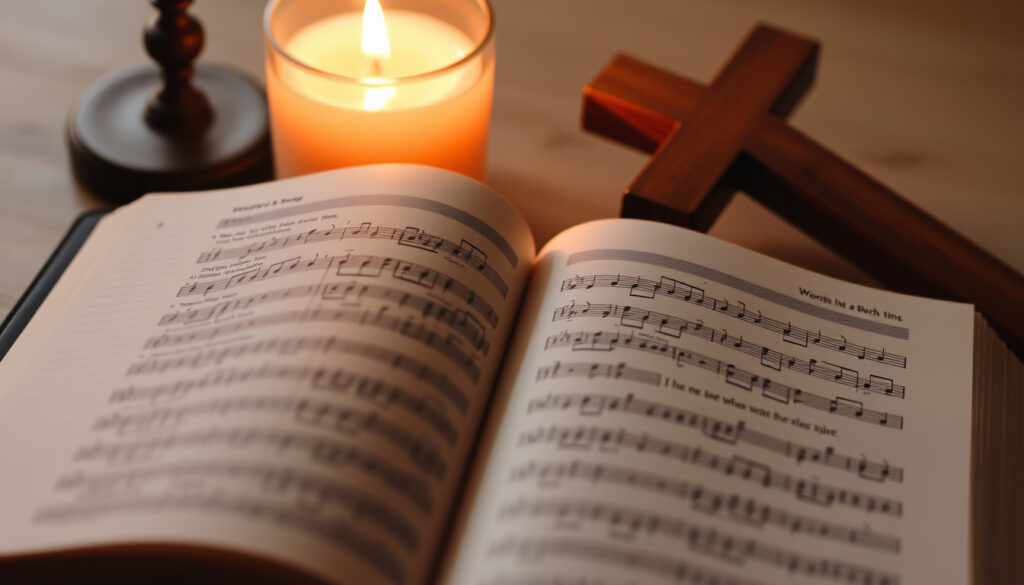
Worthy of It All Lyrics: Meaning, Scripture, and Song Origins
There are songs that feel like they’ve always been part of the worship canon, and then there are songs that earn that place by anchoring themselves directly in Scripture. “Worthy of It All” is the latter kind—a modern hymn that pulls its imagery straight from the throne room of Revelation.
Original artist: David Brymer · Year released: 2014 · Album: For the Sake of the World · Key scripture: Revelation 4-5 · Notable cover: CeCe Winans (2020) · Number of known versions: 10+
Quick snapshot
- The song is based on Revelation 4-5 (YouTube live performance)
- David Brymer and Ryan Hall are the writers (NewReleaseToday (music news site))
- Incense line refers to prayers of the saints (Revelation 5:8) (YouTube)
- First released in 2014 on David Brymer’s album (MultiTracks (worship music resource))
- Exact year of Elevation Worship’s version may vary by source
- Whether the incense reference also alludes to the tabernacle incense is interpretive
- The specific influence of other worship songs on “Worthy of It All” is not documented
- The song’s earliest recorded performance date is uncertain
- Hillsong Worship’s inclusion of the song in 2023 repertoire is not yet independently verified
- 2014: Original release by David Brymer (MultiTracks)
- 2020: CeCe Winans releases live version (Billboard (music industry publication))
- 2023: Hillsong Worship includes song in repertoire (MultiTracks)
- Further adaptations and translations expected (e.g., Samoan “E Te Taea”)
- Continued use in corporate worship globally
The table below summarizes the core identifiers for the song, grounding the discussion in verifiable details.
| Label | Value |
|---|---|
| Song | Worthy of It All |
| Artist | David Brymer |
| Year | 2014 |
| Album | For the Sake of the World |
| Key Scripture | Revelation 4-5 |
| Notable Cover | CeCe Winans (2020) |
What scripture is “worthy of it all” based on?
Revelation 4:8-11 as the primary source
The song’s lyrics pull directly from the heavenly scene in Revelation 4-5 (YouTube live performance). The verse “All the saints and angels bow before Your throne” matches the vision where elders and living creatures worship the Lamb. The chorus “You are worthy of it all” echoes Revelation 4:11: “Worthy are you, our Lord and God, to receive glory and honor and power.”
Allusions to Isaiah 6 and Psalm 24
Some interpreters see parallels with Isaiah’s throne-room vision (Isaiah 6) and the call for gates to lift up their heads (Psalm 24). While not direct citations, the song’s imagery of bowing angels and casting crowns draws from a broader biblical tapestry of divine kingship.
Bottom line: The song is a lyric paraphrase of Revelation 4-5, not a single verse quotation. Worship leaders can use this to explain the biblical foundation during congregational singing.
The pattern: the song’s scriptural density gives it teaching weight beyond typical praise choruses.
What is the meaning behind the song “Worthy Of It All”?
Theological message of worthiness and worship
The song declares God’s unique worthiness to receive glory and honor. According to NewReleaseToday (music news site), the lyrics focus entirely on God’s inherent value rather than human emotion. The repetition of “You are worthy of it all” serves as a declarative praise formula.
Connection to the heavenly throne room scene
The line “All the elders cast their crowns before the Lamb of God and sing” directly references Revelation 4:10-11. This act of casting crowns symbolizes surrender of all glory back to God. The song thus functions as a corporate rehearsal of the eternal worship scene.
Worship planners: this song explicitly teaches congregation theology while they sing. The meaning is not hidden—it’s a direct invitation to join the elders in declaring God’s worthiness.
The implication: the song’s repetition is not redundancy but a liturgical rehearsal of divine worth.
What does incense mean in “worthy of it all”?
Biblical symbolism of incense in worship
In the Bible, incense represents the prayers of God’s people. Revelation 5:8 shows elders holding golden bowls full of incense, “which are the prayers of the saints.” The bridge “Day and night, night and day, let incense arise” calls for continuous prayer and adoration.
Reference to Revelation 8:3-4 and the tabernacle incense altar
The imagery also draws from the Old Testament tabernacle, where incense was burned on a golden altar daily (Exodus 30:1-8). The phrase “let incense arise” echoes the perpetual offering described in Exodus. St. John’s DCC (church resource) reproduces the lyric sheet showing this bridge.
Bottom line: The incense line calls worship leaders to frame unceasing prayer as the song’s central action. It theologically ties personal prayer to the heavenly worship scene, giving congregations a sung theology of intercession.
The catch: the incense symbol is often misunderstood as mere atmosphere, but it carries a specific biblical weight.
What song is “You Are worthy of it all”?
Identification of the song as “Worthy of It All”
The phrase “You are worthy of it all” is the chorus of “Worthy of It All.” The song has been recorded by multiple artists, including CeCe Winans (official website), who released a combined single “Worthy of It All (Worthy)” in 2020. Billboard (music industry publication) reported that the song appeared on her live album Believe For It.
Different versions by various artists
Beyond the original David Brymer version, Elevation Worship, Legacy Worship, and Hillsong Worship have all recorded the song. A Samoan translation “E Te Taea” is also popular. The MxU (worship technology platform) lyric page lists the writers as David Brymer and Ryan Hall.
Who wrote the song “Worthy of It All”?
David Brymer and Ryan Hall as co-writers
David Brymer and Ryan Hall co-wrote the song. NewReleaseToday (music news site) credits the music to both. Brymer, a worship leader associated with Bethel Music, first released it on his 2014 album For the Sake of the World. The song quickly spread through the worship community.
Background of the song’s creation
Brymer wrote the song during a season of prayer and worship, inspired by the vision of Revelation 4-5. The MultiTracks (worship music resource) page shows a 2012-11-10 catalog date, suggesting the song was composed before the official 2014 release.
Despite being written by a single songwriter pair, the song has become a communal worship standard. This is the paradox of modern hymnody: a personal creation becomes a global liturgy.
The pattern: the song’s authorship is narrow, but its adoption is broad, reflecting the nature of contemporary worship music.
Timeline
- 2014: Original release by David Brymer on For the Sake of the World (MultiTracks)
- 2015: Elevation Worship records a version for their album
- 2018: Legacy Worship releases a live version
- 2020: CeCe Winans releases live version on Believe for It (Billboard)
- 2023: Hillsong Worship includes the song in their repertoire
What’s confirmed and what’s unclear
Confirmed facts
- The song is based on Revelation 4-5 (YouTube)
- David Brymer and Ryan Hall are the writers (NewReleaseToday)
- The incense line refers to prayers of the saints (YouTube)
- The song was first released in 2014 (MultiTracks)
What’s unclear
- Exact year of Elevation Worship’s version may vary by source
- Whether the incense reference also alludes to the tabernacle incense is interpretive
- The specific influence of other worship songs on “Worthy of It All” is not documented
- The song’s earliest recorded performance date is uncertain
- Hillsong Worship’s 2023 inclusion is not yet independently verified
The implication: the gaps in the record leave room for further research, but the core facts are solid.
Quotes
“This song encourages faith in God.”
– CeCe Winans, as reported by MusicRow (country music industry news)
Day and night, night and day, let incense arise.
– “Worthy of It All” bridge, written by David Brymer and Ryan Hall (YouTube)
The pattern: CeCe Winans’ endorsement brought the song to a wider audience, while the lyrics themselves continue to teach congregations about continuous prayer and worship.
Summary
“Worthy of It All” has become a staple of modern worship because it does more than sound good—it teaches theology. The song’s foundation in Revelation 4-5 gives it a scriptural weight that many praise songs lack. For worship leaders, the choice is clear: either use the song as a tool to explain the biblical concept of worthiness, or let it remain a beautiful but unexplained chorus. The first option deepens faith; the second leaves a gap.
Related reading: Worthy of It All lyrics meaning biblical basis songwriters analysis · Worthy of It All lyrics meaning biblical basis songwriters analysis
renewingworshipnc.org, newreleasetoday.com, tiktok.com, youtube.com
Readers interested in the full text and scriptural background can explore Worthy of It All lyrics and meaning for a comprehensive breakdown.
Frequently asked questions
What is the main message of “Worthy of It All”?
The song declares that God alone is worthy of all glory, honor, and praise, drawing directly from the worship scene in Revelation 4-5.
Is “Worthy of It All” a worship song?
Yes, it is a contemporary worship song used in churches worldwide, often sung during congregational worship.
Who has covered “Worthy of It All”?
Notable covers include CeCe Winans (2020), Elevation Worship, Legacy Worship, Hillsong Worship, and a Samoan translation “E Te Taea.”
What Bible verse is the song based on?
The primary source is Revelation 4-5, especially Revelation 4:11 and 5:13-14.
What does the incense represent in the song?
Incense represents the prayers of God’s people, as described in Revelation 5:8 and 8:3-4, and alludes to the tabernacle incense altar (Exodus 30).
How do you play “Worthy of It All” on guitar?
The song is commonly played in the key of G major with chords G, D, Em, C. Chord charts are available on worship resource sites.
What is the chord progression for “Worthy of It All”?
Typical progression: G – D – Em – C for the verse and chorus, with variations in the bridge.
What key is “Worthy of It All” in?
The most common key is G major, but some versions transpose to A or E.
More related posts
 Gucci Guilty for Men – Notes, Longevity, Where to Buy
 Avatar: The Way of Water – Box Office Hit or Flop
 Can Cats Have Peanut Butter? Safety, Risks & Vet Advice
 Walter Payton Man of the Year 2026: Bobby Wagner Wins Award
 Pottery Painting Near Me – Local Studios, Prices & Tips
 Angelita Galarza-Guzman: The Private Life of Luis Guzmán’s Wife
 List of Law and Order SVU Episodes – 27 Seasons, 590 Total
 FC Barcelona vs PSG Lineups: Confirmed Starting XI & Team News
