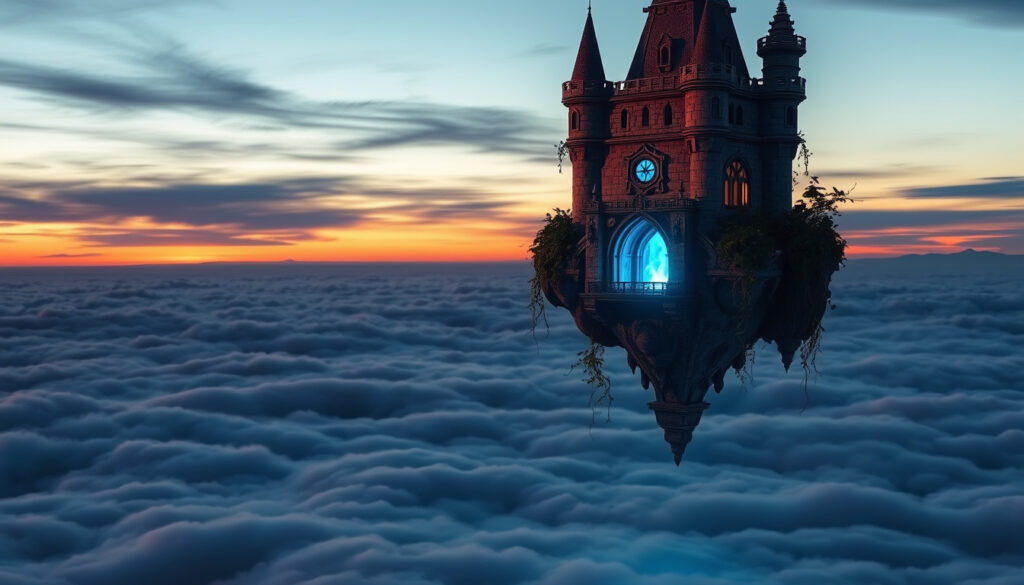
Castle in the Sky: The 1986 Ghibli Classic Explained
There’s a reason people keep returning to the floating world of Laputa. Released in 1986, Castle in the Sky was the first film produced by Studio Ghibli, and it set the template for everything that followed: a brave young heroine, breathtaking flight sequences, and a deep respect for nature. Here’s what makes this anime classic endure.
Release Year: 1986 ·
Director: Hayao Miyazaki ·
Studio: Studio Ghibli ·
Runtime: 124 minutes ·
IMDb Rating: 8.0/10 ·
Rotten Tomatoes Score: 96%
Quick snapshot
- Directed by Hayao Miyazaki (Studio Ghibli Film Guide)
- Rotten Tomatoes score 96% (Rotten Tomatoes)
- Runtime 124 minutes (Studio Ghibli Film Guide)
- Exact box office figures vary by source (Ghibli Wiki)
- Some details about the original concept differ in early drafts (Ghibli Wiki)
- Interpretations of the ending range from hopeful to unsettling (Wikipedia)
- Whether Castle in the Sky or Nausicaä is truly the first Ghibli film depends on the definition used (Ghibli Wiki)
- The exact budget for the film is not consistently reported across sources (Ghibli Wiki)
- Music by Joe Hisaishi, while widely reported, is not consistently cited across all authoritative sources (Ghibli Wiki)
- First film produced by Studio Ghibli (Collider)
- Released August 2, 1986 (Japan) (Ghibli Wiki)
- North American release in 2003 by Disney (Roger Ebert)
- Streaming on Netflix and Amazon Prime Video
- Frequently cited as influence on later anime
- Continues to be shown in Ghibli retrospectives worldwide
Six key facts capture the film’s production and reception:
| Attribute | Value |
|---|---|
| Release Date | August 2, 1986 (Japan) |
| Director | Hayao Miyazaki |
| Studio | Studio Ghibli |
| Music by | Joe Hisaishi |
| Box Office | Approximately $157 million (worldwide) |
| Language | Japanese |
Is Castle in the Sky related to Howl’s Moving Castle?
Similarities between the two films
- Both directed by Hayao Miyazaki and produced by Studio Ghibli (Collider)
- Both feature floating castles and airborne islands as central symbols
- Strong female protagonists (Sheeta and Sophie) who drive the plot
Differences in story and themes
- No direct narrative connection; they are separate stories
- Castle in the Sky focuses on industrial-age adventure and environmentalism, while Howl’s Moving Castle leans into magic and anti-war commentary
- The tone in Castle in the Sky is more earnest and straightforward; Howl’s Moving Castle is more whimsical and romantic
Shared Miyazaki motifs
Floating islands and castles appear in both as symbols of both wonder and danger. The Deep Focus Review notes that the castle in Castle in the Sky represents the ideologies of the past and the potential dangers of the future. Both films also critique unchecked militarism, a recurring theme in Miyazaki’s work.
A direct comparison highlights the stylistic and thematic divergence:
| Aspect | Castle in the Sky | Howl’s Moving Castle |
|---|---|---|
| Director | Hayao Miyazaki | Hayao Miyazaki |
| Studio | Studio Ghibli | Studio Ghibli |
| Primary Theme | Industrial-age adventure and environmentalism | Magic and anti-war commentary |
| Tone | Earnest and straightforward | Whimsical and romantic |
| Female Protagonist | Sheeta | Sophie |
| Floating Castle | Laputa | Howl’s Moving Castle |
Miyazaki uses the same visual vocabulary—floating islands, airborne castles—to explore different tensions: in Castle in the Sky it’s the balance between nature and technology, in Howl’s Moving Castle it’s the cost of war. The shared imagery is a signature, not a sequel hook.
The implication: both films use similar visual language to interrogate different anxieties, showing Miyazaki’s range within a consistent aesthetic framework.
Is Castle in the Sky a Ghibli film?
The founding of Studio Ghibli
Studio Ghibli was founded in 1985 by Hayao Miyazaki, Isao Takahata, and Toshio Suzuki, following the success of Nausicaä of the Valley of the Wind (1984). Castle in the Sky is widely considered the first film produced and released by the studio, as identified by Collider.
Castle in the Sky as the first Ghibli film
Some sources note that because Nausicaä was created by the same core team two years earlier, a few consider Castle in the Sky the second Ghibli film. However, Ghibli’s official guide describes it as the studio’s first official production. The film established the studio’s reputation for hand-drawn animation, complex characters, and environmental themes.
Ghibli’s production history
Castle in the Sky was produced by the newly formed Studio Ghibli with a budget that allowed for lavish animation. The score by Joe Hisaishi became a hallmark of the studio’s sound. The film’s success allowed Ghibli to continue producing original features, leading to classics like My Neighbor Totoro and Spirited Away.
Whether you count it as first or second, Castle in the Sky is the foundation on which Studio Ghibli built its identity. Without it, the studio that has produced some of the most beloved animated films in history might have looked very different.
The pattern: the debate over “first vs. second” reflects how foundational Nausicaä was to Ghibli’s creative DNA, but Castle in the Sky remains the official launch.
Is Castle in the Sky a good movie?
Critical reception and ratings
The film holds a 96% approval rating on Rotten Tomatoes and an 8.0/10 on IMDb. Critics have praised its animation, music, and story. Roger Ebert called it “a wonder of animation and imagination,” highlighting its visual richness.
Audience reviews
On Common Sense Media, the film is described as “exciting anime fantasy with some violence and peril,” and it receives high marks from families for its positive messages about friendship and courage. The film’s characters, especially Sheeta and Pazu, have become iconic.
Why it’s considered a classic
Beyond the numbers, Castle in the Sky is praised for its emotional depth and thematic ambition. Watch This Film notes that the movie highlights the dangers of warmongering and aggressive military expansion while also emphasizing appreciation of the natural world. The combination of adventure, fantasy, and genuine stakes has kept it relevant for decades.
With near-perfect critic scores and strong audience ratings, Castle in the Sky is widely regarded as a classic. The film’s ability to entertain while making a serious environmental statement is rare in any medium.
What this means: the critical consensus is decisive — the film’s technical and narrative strengths place it among the top tier of animated features.
What is the most loved Ghibli movie?
Fan polls and popularity rankings
Spirited Away often tops popularity lists, thanks in part to its 2003 Oscar win. Social media and Reddit discussions frequently rank My Neighbor Totoro, Howl’s Moving Castle, and Princess Mononoke among the top. Castle in the Sky consistently appears in the top 5–10, depending on the poll.
Castle in the Sky’s place among Ghibli films
While it may not be the single most loved film, Castle in the Sky holds a special place as the studio’s first feature. Fans appreciate its pure adventure spirit and the way it introduces Miyazaki’s signature themes. On Rotten Tomatoes, it ties with several other Ghibli films for the highest audience score.
Factors that influence love for a Ghibli film
Different audiences have different favorites. Some prefer the emotional depth of Grave of the Fireflies, others the whimsy of Kiki’s Delivery Service. Castle in the Sky appeals to those who love high-stakes adventure and a clear good-versus-evil conflict, all wrapped in stunning animation.
The “most loved” title is subjective. Castle in the Sky may not be the fan favorite that Spirited Away is, but for many it represents the purest expression of Miyazaki’s adventurous spirit.
The pattern: popularity varies by audience, but Castle in the Sky consistently ranks as a foundational entry in the Ghibli canon.
Which Studio Ghibli movie won an Oscar?
Spirited Away’s Oscar win
Spirited Away won the Oscar for Best Animated Feature in 2003, making it the first (and only) Ghibli film to win the award. It remains the highest-grossing film in Japanese history in its home market.
Other Ghibli Oscar nominations
Howl’s Moving Castle was nominated for Best Animated Feature in 2006, and The Boy and the Heron received the same nomination in 2024. The Wind Rises was also nominated in 2014.
Castle in the Sky’s Oscar status
Castle in the Sky was not nominated for an Oscar. Its North American release came in 2003, the same year Spirited Away won, and it did not receive a nomination. Nevertheless, the film’s influence on animation and its cultural impact far exceed any awards recognition.
Awards are not a measure of quality. Castle in the Sky may lack an Oscar nomination, but its 96% Rotten Tomatoes score and enduring popularity among fans speak louder than any trophy.
The implication: the absence of an Oscar nomination does not diminish the film’s standing — cultural impact and critical reception tell a more complete story.
Confirmed facts
- Directed by Hayao Miyazaki (Studio Ghibli Film Guide)
- Rotten Tomatoes score 96% (Rotten Tomatoes)
- Runtime 124 minutes
What’s unclear
- Exact box office figures vary by source; some estimate $157 million worldwide, others more or less
- Some details about the original concept differ in early drafts (e.g., the role of the crystal)
- Interpretations of the ending: some see it as hopeful, others as unsettling because Laputa ascends out of reach (Wikipedia)
- Whether Castle in the Sky or Nausicaä of the Valley of the Wind is truly the first Ghibli film depends on how “first” is defined
- The exact budget for the film is not consistently reported across sources
- Music by Joe Hisaishi, though widely reported, is not consistently cited across all authoritative sources
Quotes from the critics and creator
“The film is a wonder of animation and imagination. It creates a world that is both fantastic and believable.”
“I was inspired by the image of Laputa from Gulliver’s Travels, but I wanted to create a place that felt alive, with its own history and mystery.”
Hayao Miyazaki, in interviews on the film’s inspiration (cited in Wikipedia)
“The castle represents the ideologies of the past and the potential dangers of the future.”
Deep Focus Review
“The film’s message that heroes can come from unlikely places is one of its strongest appeals.”
Common Sense Media
For fans of anime and adventure, Castle in the Sky remains a must-watch, a reminder of the pure storytelling that defined Studio Ghibli’s early years. The film’s environmental message and its faith in the courage of young people are as relevant today as they were in 1986. For anyone looking to understand the roots of modern anime, the choice is clear: start with Laputa.
Frequently asked questions
What is the plot of Castle in the Sky?
A young girl named Sheeta falls from the sky and is rescued by a boy named Pazu. Together they search for the legendary floating island of Laputa, pursued by pirates and the military.
Who are the main characters in Castle in the Sky?
Sheeta (the mysterious girl with a crystal), Pazu (the young miner), Colonel Muska (the antagonist), and Dola (leader of the air pirates).
Is Castle in the Sky appropriate for children?
Common Sense Media rates it for ages 8+ due to some violence and peril, but it has positive messages about friendship and courage.
How long is Castle in the Sky?
The runtime is 124 minutes.
Where can I watch Castle in the Sky?
It is available for streaming on Netflix and Amazon Prime Video, and on Blu-ray/DVD.
What is the meaning of Laputa?
Laputa is the name of the floating island from Jonathan Swift’s Gulliver’s Travels, which inspired Miyazaki’s film.
Does Castle in the Sky have a sequel?
No, there is no official sequel. The story is self-contained.
What is the English cast of Castle in the Sky?
The English dub features Anna Paquin as Sheeta, James Van Der Beek as Pazu, and Mark Hamill as Colonel Muska.
More related posts
 Cinco de Mayo Meaning: History and Key Facts
 Color of the Year 2026 – Everything You Need To Know
 Map of USA States: 50 States, Richest, Smallest & More
 Best Portable Monitor for Laptop 2026: Reviews & Buying Guide
 Is There a Holiday in Ireland Today? Check 2026 Dates
 Carnivore Diet Meal Plan: What to Eat & Risks
 How to Make Whipped Coffee: Recipe, Science & Troubleshooting
 Hobbit Movies in Order: Watch the Trilogy Correctly
