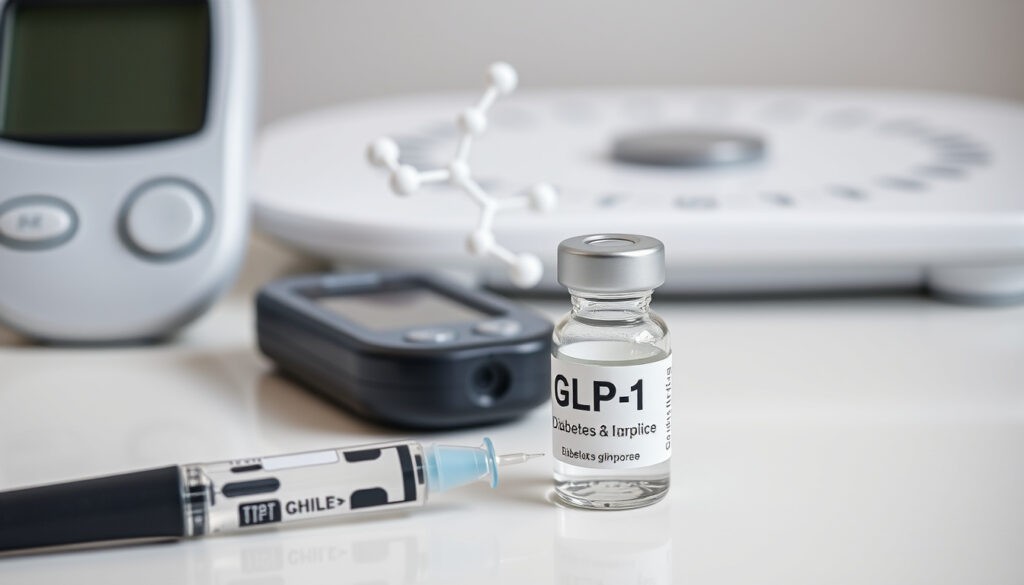
GLP-1 Agonists: Complete Guide to Drugs, Uses & Side Effects
A class of medication that started as a diabetes treatment has become a household name thanks to its weight loss effects. But with that fame comes confusion—about which drugs are which, who can take them, and what the real risks are.
Drug class: Glucagon-like peptide-1 receptor agonists ·
Number of FDA-approved agents: 7 ·
Primary indications: Type 2 diabetes, obesity (some agents) ·
Year of first approval: 2005 (exenatide) ·
Common brand names: Ozempic, Victoza, Trulicity, Wegovy, Saxenda, Byetta
Quick snapshot
- Class of medications that mimic the incretin hormone GLP-1 (NCBI Bookshelf clinical pharmacology resource)
- Increase insulin release, slow gastric emptying, reduce appetite (NCBI Bookshelf)
- Used for type 2 diabetes and weight management (SAGE Journals peer-reviewed review)
- Ozempic, Wegovy, Trulicity, Victoza, Saxenda, Byetta, Adlyxin (SAGE Journals)
- Each brand has different FDA approvals (diabetes only vs. also weight loss) (NCBI Bookshelf)
- Some available as generic (exenatide, liraglutide) (HPRA Irish medicines regulator)
- Patients with family history of medullary thyroid carcinoma (NCBI Bookshelf)
- Those with severe gastrointestinal disease (PubMed meta-analysis of adverse events)
- Caution in pregnancy and breastfeeding (NCBI Bookshelf)
- Nausea, vomiting, diarrhea are most common (NCBI Bookshelf)
- Serious risks: pancreatitis, gallbladder disease, kidney issues (PubMed)
- Many side effects improve with time or dose adjustment (SAGE Journals)
Here is a summary of the key facts about this drug class.
| Label | Value |
|---|---|
| Drug class | GLP-1 receptor agonist |
| Mechanism | Mimics incretin hormone, increases insulin release, slows gastric emptying |
| Approved uses | Type 2 diabetes, obesity (some agents) |
| Route | Subcutaneous injection (most), oral (semaglutide) |
| Common side effects | Nausea, vomiting, diarrhea |
What drugs are GLP-1 agonists?
List of approved GLP-1 receptor agonists
- Exenatide (Byetta, Bydureon) – twice daily injection or once weekly
- Liraglutide (Victoza, Saxenda) – once daily injection
- Dulaglutide (Trulicity) – once weekly injection
- Semaglutide (Ozempic, Wegovy, Rybelsus) – once weekly injection or once daily oral
- Lixisenatide (Adlyxin) – once daily injection
Seven distinct agents were approved as of 2021, according to a SAGE Journals review (peer-reviewed pharmacology). Short-acting versions (like twice-daily exenatide) tend to cause more side effects than long-acting ones, per NCBI Bookshelf clinical reference.
How GLP-1 agonists work
GLP-1 stands for glucagon-like peptide-1, a natural incretin hormone. The drugs mimic it, boosting insulin secretion when blood sugar is high, slowing gastric emptying, and signalling fullness to the brain. NCBI Bookshelf clinical pharmacology resource explains the mechanism as primarily glucose-dependent, which reduces hypoglycemia risk.
GLP-1 full form and structure
The full name is glucagon-like peptide-1 receptor agonist. Structurally, these are peptides (or peptide analogues) that bind to GLP-1 receptors. The first approved, exenatide, is a synthetic version of a compound found in Gila monster saliva. NCBI Bookshelf provides the biochemical background.
GLP-1 agonists are not one-size-fits-all. Patients and prescribers must weigh dosing frequency, side-effect profiles, and cost when choosing among exenatide, liraglutide, dulaglutide, semaglutide, and lixisenatide.
Are GLP-1 and Ozempic the same?
What is Ozempic?
Ozempic is the brand name for semaglutide, a GLP-1 agonist. It is approved in Ireland as an adjunct to diet and exercise for adults with insufficiently controlled type 2 diabetes, per Oireachtas supporting documentation (Irish parliamentary records). The same molecule, under the brand Wegovy, is approved for weight management. Ozempic is available in 0.25 mg, 0.5 mg, and 1 mg strengths, with the 1 mg dose experiencing supply constraints in 2023, according to HPRA shortage letter (Irish medicines regulator).
How does Ozempic compare to other GLP-1 agonists?
Ozempic is not all GLP-1 agonists. Other drugs include Trulicity (dulaglutide), Victoza (liraglutide), and Byetta (exenatide). Head-to-head evidence from SAGE Journals shows that once-weekly exenatide has the lowest risk of vomiting, while semaglutide tends to produce greater weight loss. The key difference: only semaglutide (Wegovy) and liraglutide (Saxenda) are FDA-approved specifically for obesity; Ozempic is approved only for diabetes, though it is used off-label for weight loss.
Using Ozempic off-label for weight loss in Ireland strains supply for patients with diabetes and is not reimbursed by the HSE, as Oireachtas documentation notes.
The pattern: only two agents carry a dedicated weight-loss label, and those are at higher doses. The trade-off: higher doses increase gastrointestinal side effects but also boost weight reduction.
| Drug | Brand Names | Dosing Frequency | Approved for Weight Loss? |
|---|---|---|---|
| Semaglutide | Ozempic, Wegovy | Weekly injection | Ozempic: no; Wegovy: yes |
| Liraglutide | Victoza, Saxenda | Daily injection | Victoza: no; Saxenda: yes |
| Dulaglutide | Trulicity | Weekly injection | No |
| Exenatide | Byetta, Bydureon | Twice daily or weekly | No |
Who cannot take GLP-1?
Contraindications for GLP-1 agonists
- Personal or family history of medullary thyroid carcinoma (MTC) (NCBI Bookshelf)
- Multiple endocrine neoplasia type 2 (MEN 2) (NCBI Bookshelf)
- Severe gastrointestinal disease (e.g., gastroparesis) (PubMed)
- Pregnancy and breastfeeding (caution advised) (NCBI Bookshelf)
The implication: screening for these contraindications is essential before prescribing.
Why older people quit GLP-1?
Older adults often discontinue GLP-1 agonists due to gastrointestinal side effects (nausea, vomiting, diarrhea), difficulty with injections, and cost. The PubMed meta-analysis notes that gastrointestinal adverse events are the most common cause of discontinuation across all age groups. Additionally, the HSE restricts reimbursement to patients with full GMS and LTI diabetes eligibility, as per HSE circular (reimbursement policy), meaning cost can be a barrier.
What organ is Ozempic hard on?
Ozempic (semaglutide) can affect the pancreas (risk of pancreatitis) and kidneys. PubMed reports rare but serious cases of acute pancreatitis and gallbladder disorders. The NCBI Bookshelf also warns about delayed gastric emptying, which complicates anaesthesia and colonoscopy prep.
For older Irish patients, the combination of side effects, injection burden, and limited reimbursement makes GLP-1 agonists a tough choice. A clear conversation with a GP about risks and alternatives is essential before starting.
What GLP-1 is available in Ireland?
List of GLP-1 agonists available in Ireland
- Liraglutide (Saxenda, Victoza) – available, Victoza for diabetes, Saxenda for weight loss
- Semaglutide (Ozempic, Wegovy) – Ozempic for diabetes, Wegovy for weight loss (supply constrained)
- Dulaglutide (Trulicity) – for diabetes
- Exenatide (Byetta) – for diabetes
All are prescription-only, regulated by the HPRA (Irish medicines regulator). The HSE restricts reimbursement for Victoza, Ozempic, and Trulicity to people with full GMS and LTI diabetes eligibility, as per HSE circular (reimbursement policy).
How to get GLP-1 in Ireland?
You need a prescription from a doctor. For diabetes, GPs can prescribe under the HSE scheme. For weight loss, Wegovy is available but at full private cost (around €200–€300 per month). Supply of Ozempic 1 mg was interrupted in September 2023, per HPRA shortage letter, so availability may vary.
What are the side effects of GLP-1 agonists?
Common side effects
- Nausea, vomiting, diarrhea, constipation, abdominal pain (NCBI Bookshelf)
- These affect up to 30–50% of patients, especially in the first weeks (SAGE Journals)
Serious side effects
- Pancreatitis (inflammation of the pancreas) (PubMed)
- Gallbladder disease (gallstones, cholecystitis) (PubMed)
- Kidney injury (acute kidney injury reported) (PubMed)
- Thyroid C-cell tumours (contraindication in MTC) (NCBI Bookshelf)
How to manage side effects
Dose titration (starting low and increasing gradually) reduces nausea. Taking injections with meals and staying hydrated also help. NCBI Bookshelf advises that side effects often decrease over time. If severe, patients should consult their doctor.
Upsides
- Effective glucose lowering with low hypoglycemia risk (NCBI Bookshelf)
- Significant weight loss (5–15% of body weight) (SAGE Journals)
- Cardiovascular risk reduction with semaglutide (PubMed)
- Once-weekly dosing options improve adherence
Downsides
- Gastrointestinal side effects common (NCBI Bookshelf)
- Serious risks: pancreatitis, gallbladder disease (PubMed)
- Injectable (most) – injection burden for some patients
- Costly without insurance coverage
- Supply shortages (Ozempic 1 mg in Ireland) (HPRA)
“GLP-1 receptor agonists are a class of medications that lower blood sugar by mimicking the action of a hormone called glucagon-like peptide-1.”
Cleveland Clinic (via NCBI Bookshelf, clinical reference)
“The most common adverse effects are gastrointestinal, particularly nausea, vomiting, and diarrhea. These tend to be dose-dependent and often improve with continued use.”
StatPearls (NCBI Bookshelf, peer-reviewed medical education)
“In Ireland, Ozempic is indicated for type 2 diabetes. Use for weight management is off-label and not reimbursed under the GMS scheme.”
For patients in Ireland, the decision to start a GLP-1 agonist comes down to a trade-off: meaningful glucose control and weight loss versus GI side effects, injection burden, and cost. If you have diabetes and meet HSE criteria, Ozempic or Trulicity may be accessible. If you are seeking weight loss without diabetes, Wegovy is available but at a significant out-of-pocket expense. The shortage of Ozempic 1 mg means that supply may be unreliable, so check with your pharmacy. Your GP can help you navigate the options based on your health profile and budget.
For a detailed overview of available medications and their effects, refer to this comprehensive guide to GLP-1 agonists.
Frequently asked questions
How do GLP-1 agonists work?
They mimic the natural incretin hormone GLP-1, which increases insulin secretion when blood glucose is high, slows gastric emptying, and reduces appetite. This leads to lower blood sugar and weight loss.
Can GLP-1 agonists be used for non-diabetic weight loss?
Yes, but only certain agents are approved for that purpose: liraglutide (Saxenda) and semaglutide (Wegovy). Ozempic is not approved for weight loss and using it off-label may strain supply for diabetes patients.
What is the difference between liraglutide and semaglutide?
Liraglutide is taken once daily (Victoza, Saxenda), while semaglutide is taken once weekly (Ozempic, Wegovy). Semaglutide generally produces greater weight loss and is available as an oral tablet (Rybelsus).
Do GLP-1 agonists interact with other medications?
They can delay gastric emptying, which may affect absorption of oral medications. Caution is needed with other diabetes drugs (especially insulin, due to hypoglycemia risk) and with drugs that require precise absorption.
How long does it take for GLP-1 agonists to work?
Blood sugar reductions can be seen within weeks, but weight loss effects accumulate over 3–6 months. Dose titration is needed to reach the effective dose.
Are GLP-1 agonists injectable only?
Most are injectable, but semaglutide is also available as an oral tablet (Rybelsus). All other GLP-1 agonists are given by subcutaneous injection.
More related posts
 Safest Countries in the World: Top 10 Rankings and Insights
 Iconic Hollywood Fast Food: Top Restaurants & Menus
 Members First Credit Union – NH Eligibility Services and Rates
 Avatar: The Way of Water – Box Office Hit or Flop
 New Balance 9060 Sea Salt: Price, Comfort, and Style Review
 Best Webcams for Zoom (2026): Our Top Tested Picks
 Mango Ice Cream Viral: Propitious Name, Price, Origin Guide
 Regions Bank Near Me – Branches, ATMs & Hours Guide
