Tire Store Near Me: Costs, Lifespan & the 3/32 Rule
Finding a reliable tire store near you shouldn’t feel like a scavenger hunt. Knowing what you’re looking for — from the 3/32-inch tread rule to tire size compatibility — can save you time, money, and a second trip.
Average tire lifespan: 25,000 to 50,000 miles ·
Average tire cost per tire: $100 to $300 ·
Number of tire stores in the US: Over 50,000
Quick snapshot
- Tires should be replaced when tread depth reaches 2/32 inch (NHTSA safety regulator)
- Mismatched tires can affect vehicle handling (Bridgestone tire manufacturer)
- Tire size changes affect speedometer calibration (Tire Rack testing authority)
- Exact tire cost varies by region and brand (Cars.com automotive research site)
- Optimal tire lifespan depends on driving conditions (Michelin tire manufacturer)
- Replace tires at 3/32 inch for safety in wet conditions (Tire Rack testing authority)
- Legal minimum is 2/32 inch but many states enforce stricter inspections (Dunn Tire retailer)
- Search for a local tire store with verified reviews (Jiffy Lube auto service chain)
- Compare prices and services before committing (Nexen Tire manufacturer)
Four key facts stand out when you start shopping for tires.
| Metric | Value |
|---|---|
| Average tire cost | $100–$300 per tire |
| Average tire lifespan | 25,000–50,000 miles |
| Tread depth rule | Replace at 3/32 inch (2/32 minimum) |
| Number of tires per set | 4 |
The pattern: the safest choice often costs no more per mile than the cheapest option.
How much should you pay per tire?
Average tire prices by type
Tire prices vary widely by type, brand, and size. A standard all-season passenger tire typically costs between $100 and $300 per tire, according to Cars.com automotive research site. Performance tires, off-road tires, and run-flat models can push above $400 each.
Factors affecting tire cost
- Brand: Premium brands like Michelin and Bridgestone cost more than budget options (Michelin tire manufacturer).
- Tire type: All-season and winter tires differ in price, with winter tires often costing 10–20% more.
- Size: Larger diameter tires (18″ and up) are more expensive than common 15″ or 16″ sizes.
Fitting and balancing costs
Installation, balancing, and disposal fees add $20–$50 per tire at most shops, as reported by Jiffy Lube auto service chain. Some stores offer free mounting when you buy a set of four.
Cheaper tires wear faster, so the long-term value of a mid-range set beats the upfront savings of a bargain bin tire.
How long should tires last?
Average tire lifespan in miles
Most passenger tires last between 25,000 and 50,000 miles, depending on the brand and model, according to Michelin tire manufacturer. New tire tread depth is typically 10/32 to 12/32 inch, with some off-road tires reaching 15/32 inch.
Signs of wear
- Tread depth below 4/32 inch: reduced wet traction (Tire Rack testing authority).
- Uneven wear: indicates alignment or inflation issues.
- Cracks or bulges: sidewall damage means immediate replacement.
Factors affecting tire longevity
Driving habits, road conditions, and climate all play a role. Aggressive acceleration, hard braking, and frequent short trips wear tires faster. Proper inflation and regular rotation can extend life by 10–20%, per Bridgestone Americas tire manufacturer.
Ignoring the 3/32-inch threshold in wet climates means accepting a 30% longer stopping distance — a trade you can’t afford.
Can I drive with three same tires and one different?
Risks of mismatched tires
Mixing tire types, tread patterns, or sizes can cause unpredictable handling, especially in emergency maneuvers. The NHTSA safety regulator warns that mismatched tires can affect stability and braking distance.
When it is acceptable
Some vehicles allow a different tire on a non-driven axle if the tire has the same diameter and load rating. However, replacing all four is always safer. Bridgestone Americas tire manufacturer recommends keeping all four tires identical.
Legal considerations
Some states, like Texas, require all tires on the same axle to be the same size and type for safety inspections (Dunn Tire retailer). Check your local regulations.
Can I use 225 tires instead of 235?
Tire size compatibility
Switching from 235 to 225 tires reduces the contact patch width by 10 mm. This can affect handling, load capacity, and speedometer accuracy. According to LVVTA technical association New Zealand, tire width must match the rim width range specified by the manufacturer.
Effects on speedometer and handling
A narrower tire will change the rolling circumference, causing the speedometer to read higher than actual speed. The difference is typically 1–3% but can be significant. Nexen Tire manufacturer provides cross-reference guides to check compatibility.
When it is safe to use different size
If the rim width is compatible and the overall diameter stays within 3% of the original, it may be acceptable. Always consult a tire size calculator or your vehicle’s manual. Schwalbe tire and rim specialist publishes detailed combination charts.
What is the 3 rule for tires?
The 3/32 tread depth rule
The “3 rule” refers to the 3/32-inch tread depth threshold. While the U.S. legal minimum is 2/32 inch, many safety experts recommend replacing tires at 3/32 inch because wet traction drops sharply below that point. Tire Rack testing authority describes 3/32 inch as “critically low” with minimal wet traction.
Why it matters
At 3/32 inch, stopping distance on wet roads can increase by 30% or more compared to a new tire. The NHTSA safety regulator rejected a petition to raise the legal indicator to 3/32 inch, finding no proven safety need, but individual states may enforce stricter standards.
How to measure tread depth
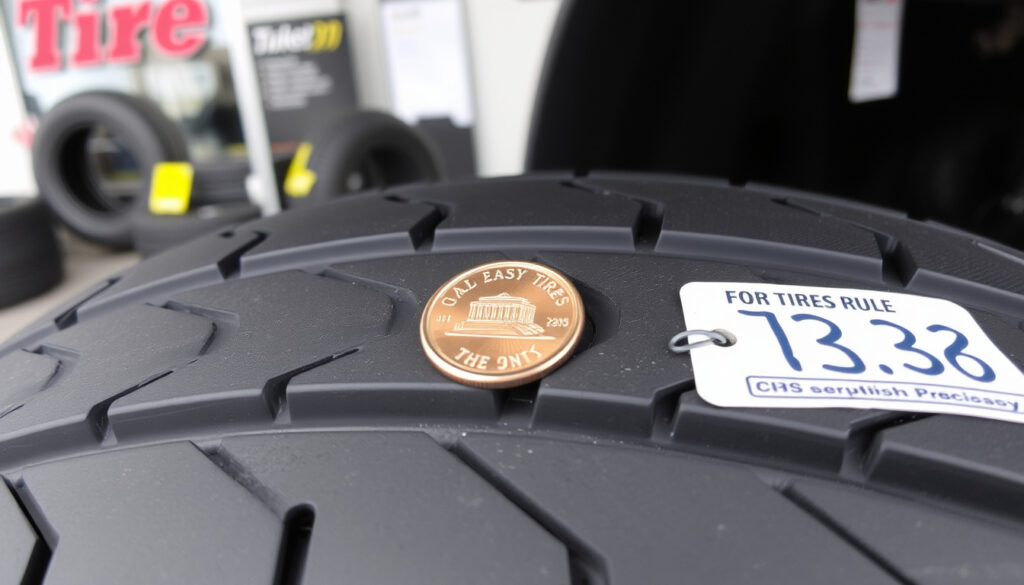
Use the penny test: insert a penny into the tread groove with Lincoln’s head facing down. If you can see the top of his head, tread is below 2/32 inch and needs replacement. Michelin tire manufacturer and Bridgestone Americas tire manufacturer both recommend this method.
How to find a tire store near you
Finding a good tire store involves more than a quick search. Follow these steps to get the best deal and service.
- Search online for “tire store near me” and check Google Maps ratings. Look for stores with 4+ stars and recent reviews.
- Verify services: ensure the store offers mounting, balancing, alignment, and disposal. Some shops also do mobile tire fitting (Jiffy Lube auto service chain).
- Compare prices: call or check online for price lists. Many stores advertise “buy 3 get 1 free” deals.
- Ask about warranty: reputable tire stores offer manufacturer warranties and road hazard protection.
- Schedule an appointment, especially for same-day service. Many stores can fit new tires within an hour.
A store that insists on a brand you’ve never heard of or refuses to give a written estimate is a red flag. Stick to shops with transparent pricing and positive local reputation.
Confirmed facts vs. What’s unclear
Confirmed facts
- Tires should be replaced when tread depth reaches 2/32 inch (NHTSA safety regulator)
- Mismatched tires can affect vehicle handling and safety (Bridgestone Americas tire manufacturer)
- Tire size changes affect speedometer calibration (Tire Rack testing authority)
- The 3/32 inch rule is a safety recommendation, not a federal law (NHTSA safety regulator)
What’s unclear
- Exact tire cost varies by region, brand, and season (Cars.com automotive research site)
- Optimal tire lifespan depends heavily on driving conditions and maintenance (Michelin tire manufacturer)
- State inspection requirements for tread depth vary widely (Pirelli tire manufacturer)
Expert perspectives
“The 2/32-inch threshold is the legal minimum, but at 3/32 inch, wet traction is already critically reduced. We recommend replacing at 3/32 for safety.”
— Tire Rack testing authority
“Our testing shows that tires at 3/32 inch can take up to 30% longer to stop on wet roads compared to new tires. That’s a significant difference in an emergency.”
— Michelin tire manufacturer
“If you live in a state with safety inspections, know that a tire below 3/32 inch may fail the test. It’s better to replace before you’re forced to.”
— Dunn Tire retailer
Choosing a tire store isn’t just about the cheapest price. The real cost of tires includes their lifespan, your safety, and the convenience of a shop you trust. The implication: a driver who replaces at 3/32 inch instead of waiting until 2/32 inch may buy an extra set every 4 years — but avoids a potentially fatal crash.
Related reading: Best SUVs for Families 2026 · 2025 Lexus GX 550: Price, Specs & Key Comparisons
Frequently asked questions
What is the best tire brand?
There is no single best brand — it depends on your vehicle, driving conditions, and budget. Michelin, Bridgestone, and Continental are consistently rated highly for performance and longevity. Check independent reviews and your vehicle manufacturer’s recommendations.
Should I buy used tires?
Used tires can be a budget option, but they come with risks. You don’t know their history, and hidden damage from road hazards or improper storage can make them unsafe. If you buy used, inspect tread depth, sidewall condition, and look for the DOT date code to confirm age.
How often should I rotate tires?
Most manufacturers recommend rotating tires every 5,000 to 7,500 miles, typically at the same interval as oil changes. Regular rotation promotes even wear and extends tire life.
What is the difference between all-season and winter tires?
All-season tires are designed for year-round use in moderate climates, offering decent traction in light snow. Winter tires use a softer rubber compound and deeper tread patterns for superior grip in snow and ice. If you live in an area with harsh winters, dedicated winter tires are strongly recommended.
Can I mix tire brands on the same axle?
It is not recommended. Different tire brands have different tread patterns, rubber compounds, and handling characteristics. Mixing them on the same axle can lead to unpredictable handling and reduced safety. Always keep the same brand and model on the same axle.
How do I check tire pressure?
Use a tire pressure gauge to measure the pressure when the tires are cold (before driving). The recommended pressure is listed on the driver’s side door jamb or in the owner’s manual. Check it monthly for optimal performance and safety.
What is the warranty on new tires?
Most new tires come with a limited warranty covering defects in materials and workmanship — typically 3 to 6 years. Many also include a treadwear warranty that provides a prorated refund if the tire wears out earlier than the promised mileage. Check the specific warranty from the manufacturer and the retailer.
More related posts
 Best SUVs for Families 2026: Reliable, Affordable & UK Picks
 How Many People Attended the Military Parade? Army 250th Facts
 Are We There Yet Franchise Guide: Movies, TV Series & Cast
 Is There a Holiday in Ireland Today? Check 2026 Dates
 Joseph Quinn Movies and TV Shows: Complete Filmography
 La Casa de los Famosos en Vivo: Watch Live & Free Streams
 John 3:16: Verse, Meaning, and Why It’s So Powerful
 Local Restaurants Near Me – Bemidji Open Now, Top Ratings & Maps
