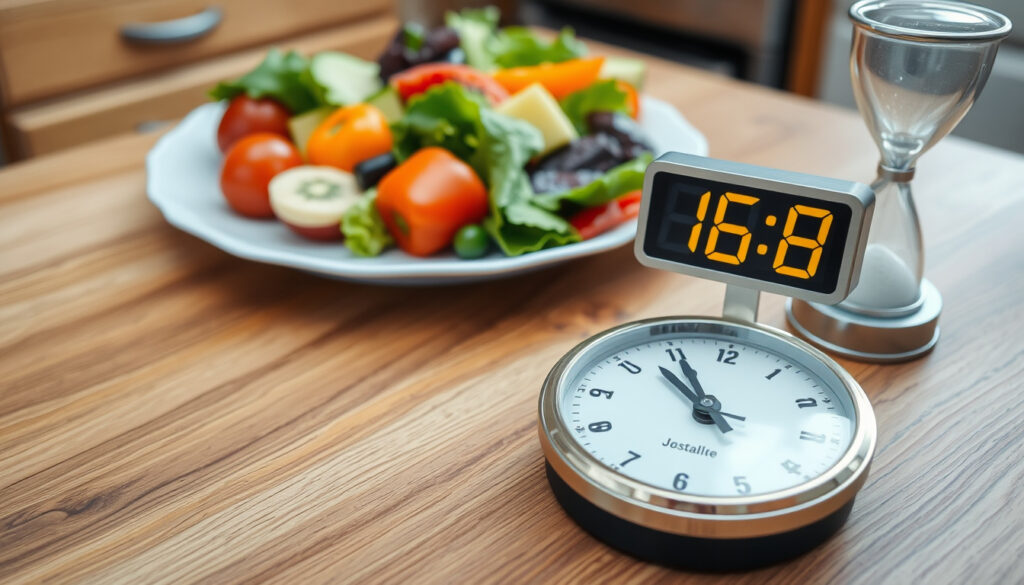
What Is Intermittent Fasting? A Beginner’s Guide (2025 Evidence)
If you’ve ever wondered whether the secret to better health lies not in what you eat but when you eat, you’re not alone. Intermittent fasting (IF) has become one of the most talked-about eating patterns, with roughly 24% of U.S. adults reporting that they’ve tried it at least occasionally (NIH, 2025). This guide walks you through what IF actually is, how to start safely, and where the evidence — and the warnings — come from.
Most popular IF method (16:8): 16 hours fasting, 8 hours eating window · Weight loss reported by participants: 3–8% of body weight over 3–24 weeks (Hopkins Medicine, 2026) · Risk of type 2 diabetes reduction: May improve insulin sensitivity (Mayo Clinic, 2025) · Approximate practitioner count (US): 24% of adults occasionally use IF (NIH, 2025)
Quick snapshot
- IF can help with weight loss — 3–8% body weight over 3–24 weeks (Hopkins Medicine, 2026)
- Common methods: 16:8, 5:2, alternate-day fasting (Mayo Clinic, 2025)
- Approved drinks: water, black coffee, unsweetened tea (Apollo 247)
- Long-term effects beyond 1 year are not well studied (Harvard T.H. Chan School of Public Health, 2025)
- Impact on heart health and cancer risk requires more trials (British Heart Foundation, 2025)
- Whether dirty fasting provides the same benefits is disputed (NIH, 2025)
- Most weight-loss studies cover 3–24 weeks; long-term safety data scarce (Hopkins Medicine, 2026)
- No large-scale trial lasting more than 1 year exists for IF in general population (Harvard T.H. Chan, 2025)
- More randomized controlled trials comparing IF with continuous calorie restriction (BMJ, 2025)
- Updated guidance expected as safety data matures (Mayo Clinic, 2025)
Five key facts about intermittent fasting, one pattern: each method shares a common mechanism of timed eating but differs in strictness and feasibility.
| Label | Value |
|---|---|
| Definition | Eating pattern that cycles between periods of eating and fasting, focusing on timing rather than specific foods. |
| Common methods | 16:8, 5:2, alternate-day fasting, 24-hour fasts |
| Primary benefit (weight loss) | 3–8% body weight reduction over 3–24 weeks (Hopkins Medicine, 2026) |
| Primary risk | Nutrient deficiencies, disordered eating, possible gallstones (NIH, 2025) |
| Contraindications | Pregnancy, underweight, history of eating disorders, type 1 diabetes (Mayo Clinic, 2025) |
What is intermittent fasting?
Definition and mechanism
Intermittent fasting is not a diet in the traditional sense — it’s an eating pattern that cycles between periods of fasting and eating. The core idea is that by restricting the window in which you consume calories, your body may shift metabolic pathways that improve insulin sensitivity and trigger cellular repair processes. Hopkins Medicine (2026) explains that IF focuses on when you eat, not what you eat.
During the fasting period, insulin levels drop and the body begins to burn stored fat for energy. Harvard T.H. Chan School of Public Health (2025) notes that fasting periods can improve metabolic health by regulating insulin and promoting autophagy — a cellular cleaning process. However, the long-term effects beyond one year remain unstudied.
How it differs from traditional diets
- Traditional diets restrict calories continuously; IF restricts the time you can eat.
- IF allows normal eating within the window — no specific food bans (Mayo Clinic, 2025).
- A major 2025 BMJ review found that IF diets may have similar weight-loss benefits to continuous energy restriction.
For a beginner, IF offers flexibility — you don’t need to count every calorie. But the same flexibility can lead to overeating during the eating window, cancelling out the metabolic advantage.
The implication: If you choose IF, structure your eating window with mindful portions to avoid negating the benefits.
How do I do intermittent fasting?
Step-by-step beginner plan
Start with a 12-hour overnight fast recommended by Mass General Brigham (2025). For many people, a 12- to 14-hour fast is a relatively safe starting point. Gradually shorten the eating window over a week or two to reach 16:8 if desired.
- Week 1: Eat within a 12-hour window (e.g., 8 a.m. to 8 p.m.).
- Week 2: Shrink to 10-hour window (e.g., 9 a.m. to 7 p.m.).
- Week 3: Aim for 8-hour window (e.g., 12 p.m. to 8 p.m.) — the 16:8 method.
Stick to water, black coffee, or tea during fasting hours. Mass General Brigham emphasizes that hunger is the main side effect early on, and temporary weakness or reduced mental performance may occur while your body adapts (Healthline, 2025).
Choosing a schedule (16:8, 5:2, etc.)
Compare the three main schedules for intermittent fasting.
| Method | Description | Sustainability |
|---|---|---|
| 16:8 | Fast 16 hours, eat in 8-hour window | Most popular and sustainable (Hopkins Medicine, 2026) |
| 5:2 | Eat normally 5 days, restrict to 500–600 calories 2 days | Flexible but requires planning |
| Eat-Stop-Eat | 24-hour fast once or twice a week | Challenging for beginners |
Harvard T.H. Chan suggests that an 8-hour or shorter eating window is where benefits begin to appear, while a 10-hour window can be a gradual starting point. Consistency matters more than specific hours (Hopkins Medicine, 2026).
Tips for starting safely
- Consult a doctor before starting IF if you have medical conditions or take medications that affect blood sugar or blood pressure (Mass General Brigham, 2025).
- People with diabetes should discuss medication adjustments to avoid hypoglycemia (Harvard T.H. Chan, 2025).
- IF is not recommended during pregnancy, breastfeeding, or for children (Harvard Nutrition Source, 2025).
For a healthy adult, starting with a 12-hour fast and consulting a doctor before extending the window can prevent common side effects.
What this means: Starting slowly and consulting a professional are the two most important steps for safe IF.
What are the best hours for intermittent fasting?
Comparing morning vs. evening eating windows
Harvard T.H. Chan (2025) reports that early time-restricted feeding (e.g., 8 a.m. to 4 p.m.) may improve insulin sensitivity more than later windows. However, many people find a 12 p.m. to 8 p.m. window more convenient for social eating (BBC Good Food, 2025).
Aligning with circadian rhythm
Eating earlier in the day aligns with your body’s natural circadian rhythm, potentially aiding metabolic health. A 2025 Mayo Clinic note suggests that a 16-hour fast with an 8-hour eating window may raise heart disease risk compared with other time-restricted cycles — though evidence is still medium confidence.
Does sleeping count as fasting?
Sleeping hours count toward your fasting window. For instance, fasting from 7 p.m. to 7 a.m. is a 12-hour fast, which is a great starting point for beginners.
Effectiveness for weight loss
Harvard Nutrition Source reviewed 40 studies and found a typical loss of 7 to 11 pounds over 10 weeks. The 2025 BMJ review confirms that adverse events are mostly mild (constipation, nausea, hunger) and that IF appears comparable to calorie restriction for weight loss.
“Intermittent fasting is all about when you eat, not what you eat.”
— Hopkins Medicine (2026)
The catch: The ideal window depends on your lifestyle and health goals; the scientific consensus points to early eating windows for metabolic benefits.
What can I drink while fasting?
Fasting-approved beverages
- Water, black coffee, unsweetened tea, and sparkling water — these are safe (Apollo 247).
- No-calorie drinks do not break a fast.
Drinks that may break a fast
Any beverage with calories — including milk, cream, sugar, or protein shakes — can disrupt the fasted state. NIH (2025) notes that dirty fasting (allowing small amounts of milk or artificial sweeteners) is controversial; its benefits are disputed.
Dirty fasting explained
Dirty fasting means consuming up to 50 calories during the fasting window — e.g., a splash of milk in coffee. NIH states that the evidence for dirty fasting providing the same metabolic benefits as strict fasting is inconclusive. Bone broth may also trigger an insulin response in some people.
If you’re trying dirty fasting to make it easier, you risk losing the autophagy and insulin-lowering benefits that make IF effective in the first place.
The pattern: Staying strictly with zero-calorie drinks maximizes the fasting effects, but if dirty fasting helps adherence, it’s better than quitting IF altogether.
Why are doctors against intermittent fasting?
Medical concerns and risks
Hunger is the most commonly reported side effect (Healthline, 2025). Mayo Clinic (2025) lists tiredness, dizziness, headaches, mood swings, constipation, and menstrual-cycle changes as possible. NIH (2025) flags nutrient deficiencies, disordered eating patterns, and gallstones.
Contraindications and vulnerable populations
Mass General Brigham (2025) advises avoiding IF if you have diabetes, heart, kidney, or liver disease, a history of eating disorders, pregnancy, breastfeeding, low blood pressure, or take certain medications. Harvard Nutrition Source adds that people with active growth needs or at high risk of bone loss should abstain.
For anyone with type 1 diabetes or a history of anorexia, IF is not a lifestyle hack — it’s a medical risk. Always get a doctor’s green light.
“Start with a 12-hour fast overnight, then gradually increase.”
— Mayo Clinic dietitian (2025)
“Intermittent fasting can trigger cellular repair processes and may reduce inflammation.”
— Dr. Mark Mattson, NIH News in Health
The verdict: IF is not a universal solution; individual health profiles determine safety.
Upsides
- Effective weight loss: 3–8% body weight over 3–24 weeks (Hopkins Medicine, 2026)
- No calorie counting or food restrictions
- May improve insulin sensitivity (Mayo Clinic, 2025)
- Flexible scheduling — fits many lifestyles
- Comparable weight-loss results to calorie restriction (BMJ, 2025)
Downsides
- Hunger, fatigue, dizziness, mood swings (Mayo Clinic, 2025)
- Risk of nutrient deficiencies (NIH, 2025)
- Not safe for many medical conditions (Mass General Brigham, 2025)
- Potential muscle loss if protein intake inadequate (BBC Good Food, 2025)
- Long-term effects still unknown (Harvard T.H. Chan, 2025)
For the average healthy adult looking for a structured way to reduce calorie intake, IF offers a proven, flexible tool. For more on managing calories, read our guide on How Many Calories Should I Eat to Lose Weight? A Guide. But for anyone with underlying health conditions — especially diabetes, a history of eating disorders, or pregnancy — the choice is clear: either get medical supervision first, or stick with continuous calorie restriction under a doctor’s guidance. The verdict from the 2025 BMJ review is that IF works, but it’s not a free pass — and safety requires more than motivation. For a nutrient-dense food option, check out Calories in an Egg: Boiled, Fried, Scrambled & More.
pmc.ncbi.nlm.nih.gov, healthline.com, healthline.com, gynaecology-obstetrics-journal.com, mayoclinic.org, pmc.ncbi.nlm.nih.gov, hsph.harvard.edu, nutritionsource.hsph.harvard.edu, pmc.ncbi.nlm.nih.gov, pmc.ncbi.nlm.nih.gov
Frequently asked questions
Can I drink coffee while intermittent fasting?
Yes, black coffee without sugar or cream is permitted. It contains virtually no calories and will not break your fast. (Apollo 247)
Does intermittent fasting cause muscle loss?
Some studies suggest muscle loss can occur if protein intake is inadequate. BBC Good Food (2025) recommends prioritising protein during the eating window.
How long does it take to see results from intermittent fasting?
Weight loss of 7–11 pounds over 10 weeks is typical (Harvard Nutrition Source, 2025). Individual results vary.
Can I do intermittent fasting if I have diabetes?
Only under medical supervision. Medication doses may need adjustment to avoid hypoglycemia (Harvard T.H. Chan, 2025).
Is intermittent fasting safe for women over 50?
It can be, but Mayo Clinic (2025) warns that women at high risk of bone loss should avoid IF. Consult a doctor first.
What is the difference between intermittent fasting and calorie restriction?
Calorie restriction reduces daily intake; IF restricts the eating window. The 2025 BMJ review found similar weight-loss outcomes between the two approaches.
More related posts
 Easy Ground Beef Recipes with Few Ingredients: Quick Dinners
 What Is Hepatitis B – Symptoms, Causes, Treatment, Vaccine
 Destined Rivals Card List: Pokémon TCG Checklist & Prices
 5 cm to Inches: Conversion, Size Comparisons & Visuals
 Adria Arjona Movies and TV Shows – Complete Filmography 2024
 What Is 6-7 Slang? Meaning, Origin, and Hand Gesture Explained
 2024 GMC Sierra 2500HD: Price, Specs, Reviews & Problems
 DJI Mini 5 Pro: Release Date, Price, Specs & Is It Worth It
